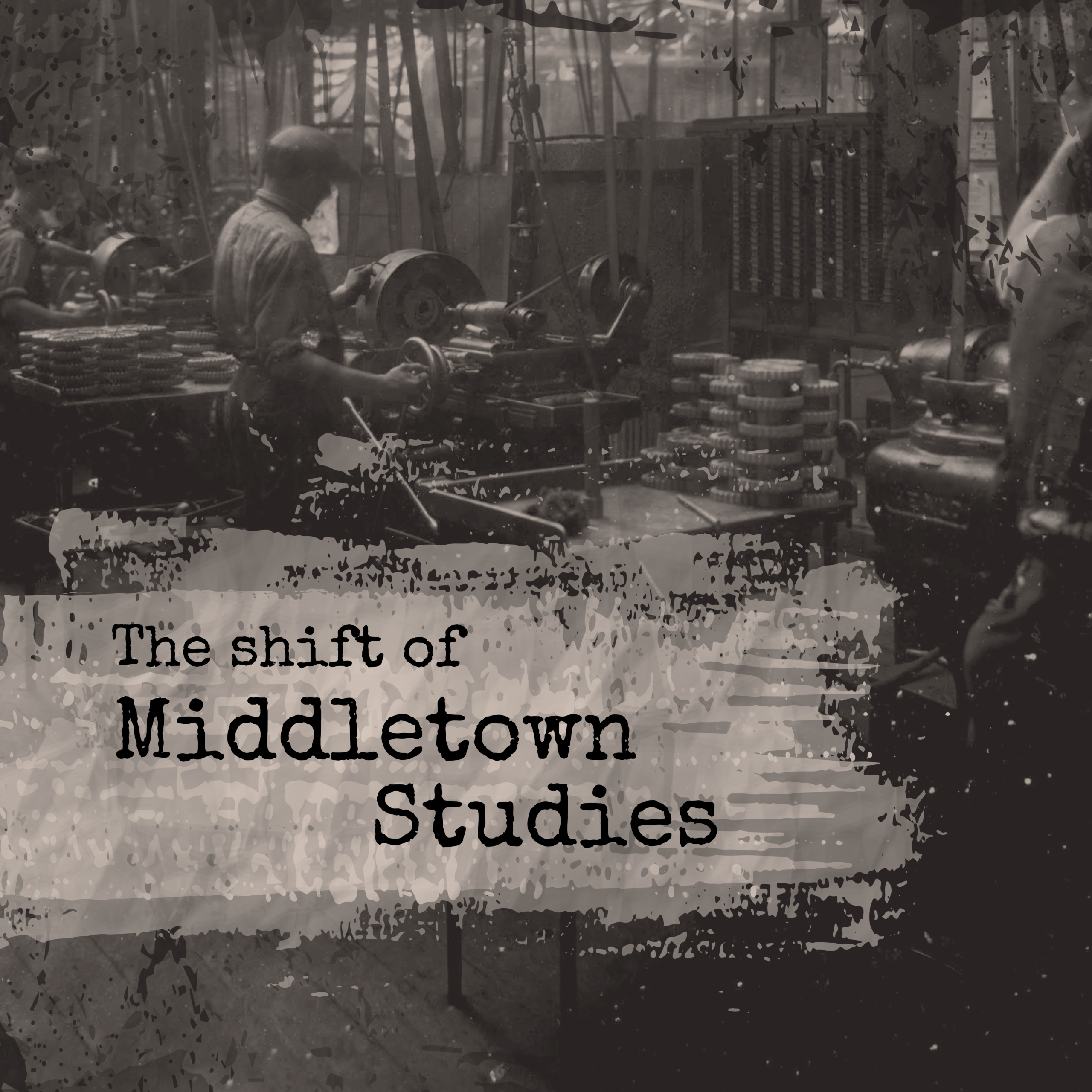
Researchers Robert S. and Helen Merrell Lynd created a landmark study of Muncie beginning in 1924, which changed the way the world viewed “America’s Hometown.” They eventually published a book about Muncie’s core values, highlighting one particular value: industrial life. Since then, Ball State University has built on the Lynds’ work, researching Muncie’s underdevelopment.
Robert and Helen conducted research in 1929 in Muncie, naming the project Middletown. This research focused on six key areas of life in Muncie: “Getting a Living,” “Making a Home,” “Training the Young,” “Using Leisure,” “Engaging in Religious Practice,” and “Engaging in Community Activities.” The conclusion was that ultimately, Muncie’s core values and beliefs have remained safe for 35 years.
The Lynds created a follow-up to this research study in 1937 during the Great Depression to observe the effects of economic hardship on the community. What they ultimately found was that the social structure remained intact despite widespread economic distress.
Later on, a group of people decided to pick up on this research and create a center for Middletown studies at Ball State University. The center focuses on the drastic shift between the original Muncie Middletown studies compared to its current state.
Some of the people in the group joined for personal experiences, and others with a profound interest in the shift in history. Chris Fluke is a mixture of both of these, having been the previous director of Middletown Studies at Ball State University.
He recalls that back in the 1910s, the gas in Muncie ran out. It was particularly known for its glass making, which used a lot of natural gas, but when that ran out, factories began to leave, with a small percentage of those that stayed. Bruce Gelhoed also recalled this deindustrialization in the 1910s. He believed that this was regional instead of being primarily focused on Muncie.
This still created a significant shift in the Muncie community. Many jobs, such as companies like General Motors, Warner Gear, and Delco-Remy, were major employers that all closed their Muncie operations by the late 1900s. Leading to significant job losses and a shift in the local economy, the citizens of Muncie are leaving lots of families in confusion. One of which was Chris’ family in the 1990s.
“My dad worked in a factory. It was started as Westinghouse and they made big electrical transformers that went out in 1999, and it is one of the many factories that [closed] in the 80s and the 90s. They employed several 1000 people. He was all right, but it ended up costing him,” Chris said.
Chris is a prime example of how the Muncie community was during this time. It’s the harsh truth that came after the deindustrialization. The current director of Middletown studies at Ball State, James Connolly, is one of these current researchers who dives deep into the topic of deindustrialization.
“I’m a historian who studies the history of cities. I knew about Middletown research before I came here. It was, it was an interesting facet of life in Muncie, and what Ball State was doing in Muncie,” James said.
Middletown research has come so far from the beginning of the 1900s to now. There are many layers in the Middletown research as it not only focuses on the industrial downfall, but other things in Muncie as well.
Research is still being done at Middletown studies at Ball State’s Bracken library and James is peeling back many layers of history and will continue to do so in the following years.
This article is a part of Ball Bearings Fall 2025 magazine: The Archival Edition. Read more stories online at ballbearingsmag.com and pick up the print edition of the magazine across Ball State’s campus now.