Walking into the Muncie Children’s Museum (MCM), one is overcome with nostalgia.
Echoes of children’s laughter bounce off the primary-colored murals that paint the walls, and tiny shoeprints leave indents in the carpet as children scurry across all four corners of the main floor.
Although the museum serves as a vessel for sustaining childlike wonder, it has taken strides to continue to nurture imagination among younger generations growing up in an increasingly digitized world.
“The premise of the museum has always been hands-on, educational activities, programs and exhibits for children and their families,” Kynda Rinker, MCM’s executive director, said. “We believe children learn through play.”
Since stepping into her position in 1997 — one year after the Muncie location opened — the museum has undergone continuous renovations to maintain foot traffic, including partnering with Ball State University in the mid-2000s when architecture students designed MCM’s “Tot Spot,” a play area designated for children five and under that is still in use today.
“We knew at that point that changing things, adding exhibits [and] changing out exhibits, really helps increase attendance,” Kynda said, adding that the museum now sees an approximate 3,000-person increase each year as new exhibits are unveiled.
Post-COVID-19 pandemic, the museum emphasized interactive opportunities, opening a train exhibit in February 2024 and a water attraction not long after, designed to teach children about Muncie’s local train stations and rivers. Kynda said these exhibits could potentially enable the museum to break 50,000 visitors by the end of the year — the highest attendance rate since the museum’s grand opening.
MCM isn’t the only place in the city that has been forced to reevaluate the significance of its imprint in the aftermath of the pandemic.
“[The pandemic] definitely got us thinking outside the box in terms of how we can reach people when they couldn’t come to our facilities,” Sara McKinley said.
Sara, the Carnegie Library manager and archivist for Muncie Public Library (MPL), said many of the library’s outreach ideas that emerged out of COVID-19 still exist today. This includes curbside pickup, weekly storytime sessions, and various hybrid book clubs like “Droids and Dragons,” a program specifically for sci-fi and fantasy literature lovers.
“Some of the members who attend have moved out of state but wanted to continue participating, or some people are homebound and wanted an option to continue participating,” Sara explained, highlighting the value and comfort of the continued source of human interaction by way of accessibility.
As an archivist, Sara said accessibility remains one of the key advantages of digitization within the industry.
“Digital preservation does have the benefit of increasing accessibility, because information can be in many places at once and accessible from anywhere in the world, whereas the document is only viewable in its physical location or an analog piece of information,” she said.
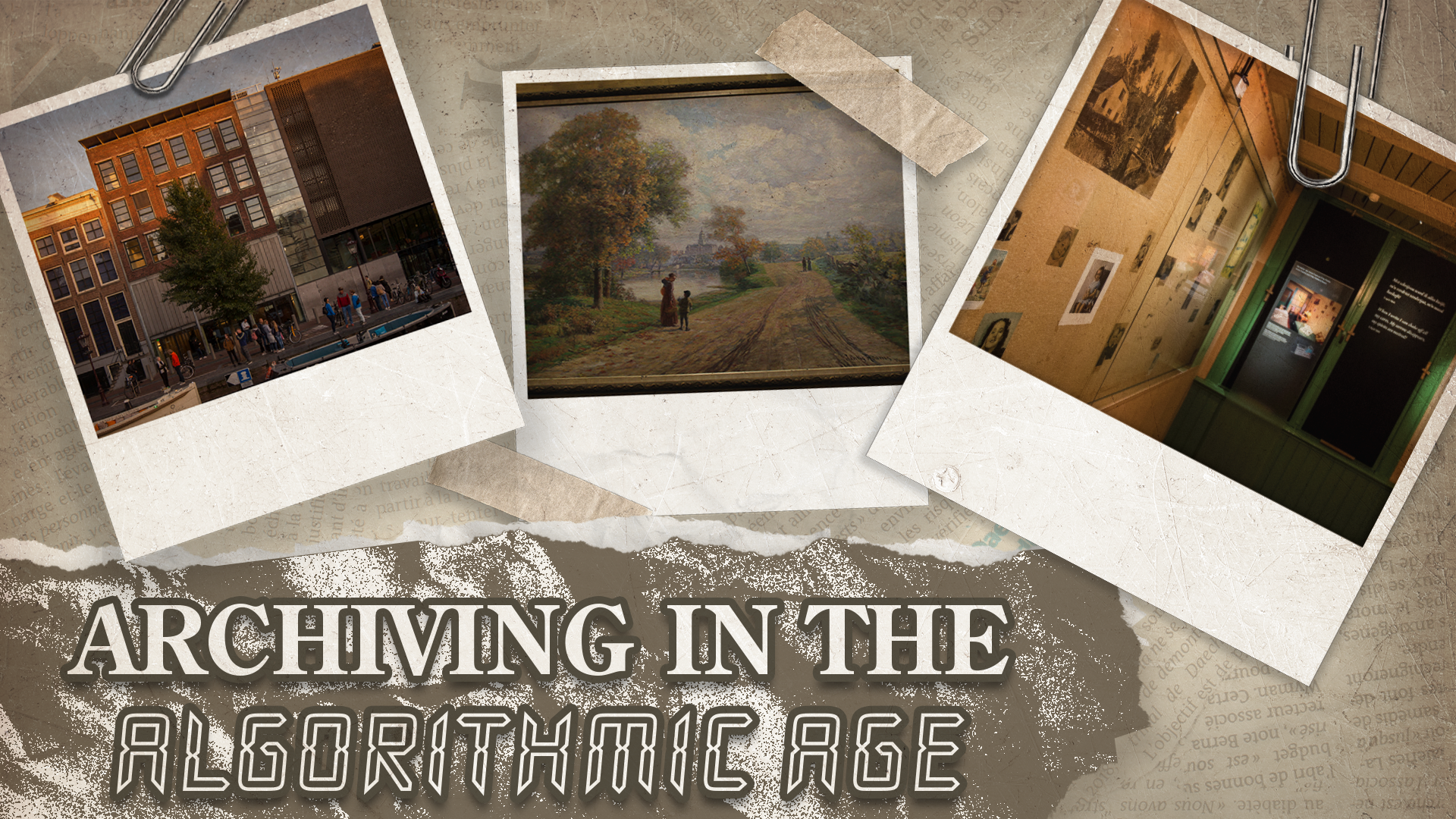
Museums across the globe continue to utilize the full extent of accessibility features provided by technological advancements — including The Anne Frank House in Amsterdam, Netherlands — which offers several online tours.
Annemarie Bekker, a communications consultant for The Anne Frank House, said via email, “We provide the online tours for people who are unable to visit the actual Anne Frank House, and for visitors with limited mobility who cannot climb the stairs to see the Secret Annex. In addition, we use the tours as part of our educational programs for school groups and in Anne Frank exhibitions around the world.”
The educational expansion Annemarie mentioned is yet another benefit of digitization, making it easier to maintain large quantities of information in an orderly fashion.
Leo Gillis, director of archives and special collections at Ball State, agreed, as the university has garnered a rich history since its opening in 1918, making it impossible to honor all aspects of it and the surrounding city of Muncie.
When it comes time to decide what to keep in Ball State’s archival collections, “We set out parameters of what we will and will not collect. We have to do this because we have limited space and resources, and we simply can’t take everything that people would like to donate to us,” he said.
Similar parameters are in place at MPL. With each new object of information, Sara said she and her colleagues explore whether or not the library is the best-suited place in the city to sustain certain history.
They also look to mitigate informational gaps through the library’s curated archival collection and the general condition of the material they are trying to preserve.
“Some things we have to take into consideration [are] what condition [an archive] is in and whether it’s best to preserve the original item or make a duplication of that item to preserve the information, but not the object,” Sara said.
Regardless, the relevancy of the information is always the first priority.
“It’s not necessarily the format of the object that matters. It’s the history and the connection behind it and the cultural significance that makes it worthy of being preserved and part of an archive,” she said.
Leo underscored a modern-day “explosion of information,” especially as the capabilities of artificial intelligence continue to advance, calling born-digital artifacts, such as text messages or emails, “ubiquitous” in modern-day society.
He also cautioned against digitization being the main mode of preservation and said that, as convenient as it may be, it’s far less reliable than some of humanity’s oldest artifacts, like cuneiform tablets, which have lasted 5,000 years.
“The real irony is that, as technologically advanced as we are, what we create the most of is the most fragile. We create so much digital material, and it is the most fragile information system ever devised. It will decay over time, guaranteed,” he said. “To think that somehow the internet is, like, your attic trunk that you’re keeping grandma’s wedding dress in — it’s very misleading — because her wedding dress is disintegrating.”
However, the disintegration of digitization is not necessarily something that worries Leo.
“I think, in effect, archivists are actually going to become more important over time — not less important, but they are going to have to adapt their skills,” he said.
Similar sentiments were shared by Annemarie, who alluded to the idea that digital imitation is no substitute for physical immersion or the authenticity of an experience.
“The online tours are a supplement to, or an alternative for, a visit to the physical Anne Frank House, not a replacement. For those who will never be able to visit the real house, they offer a meaningful alternative,” she said.
This article is a part of Ball Bearings Fall 2025 magazine: The Archival Edition. Read more stories online at ballbearingsmag.com and pick up the print edition of the magazine across Ball State’s campus now.