Editor’s Note: This story has been updated to correct factual errors regarding The Indiana Department of Transportation communication, the project’s origins, and the status of proposed roundabouts. An earlier version misstated these details, and they have since been corrected.
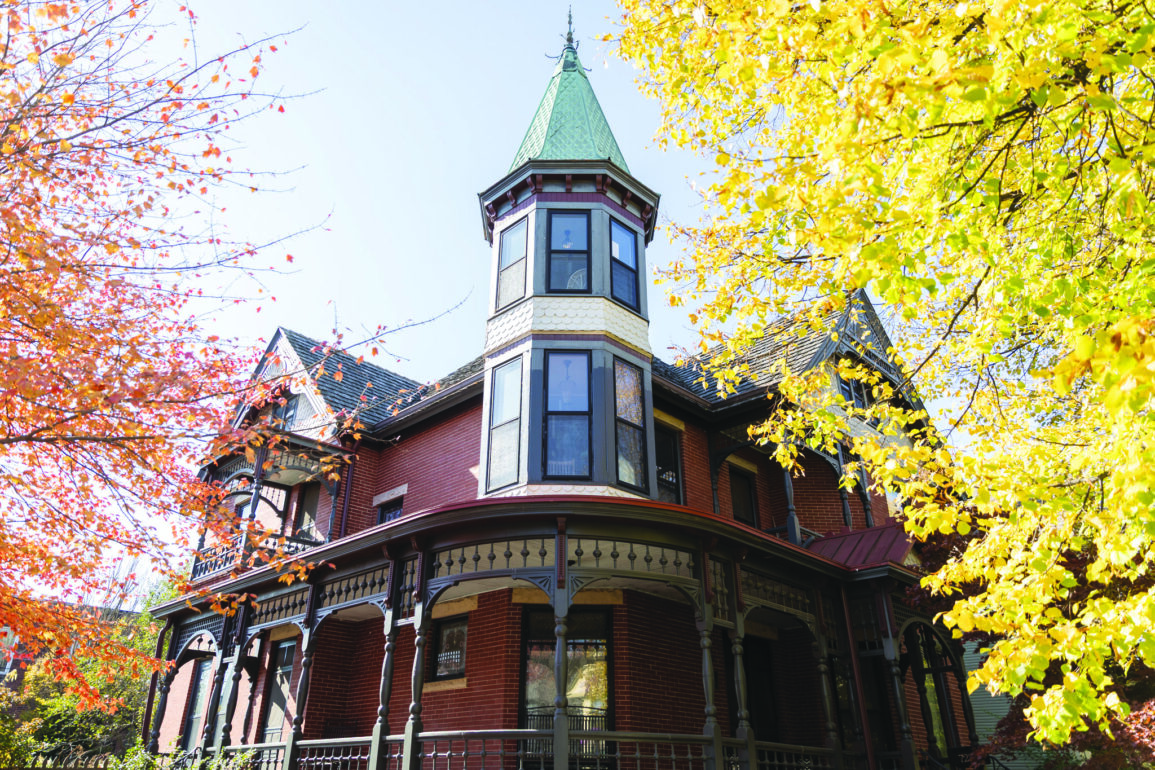
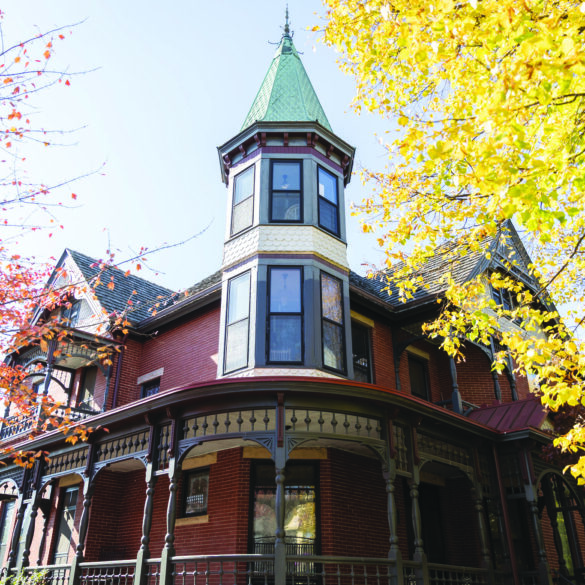
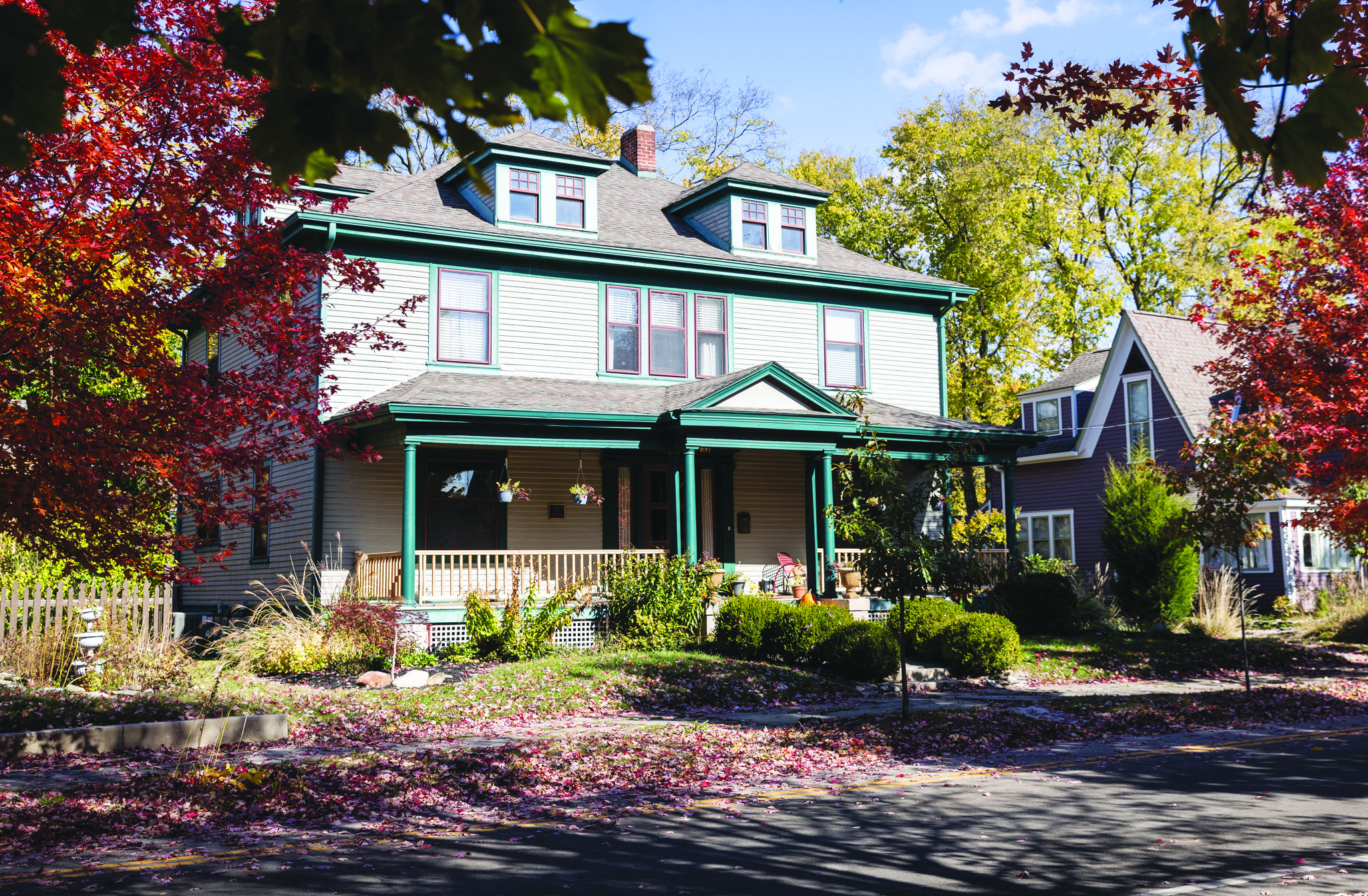
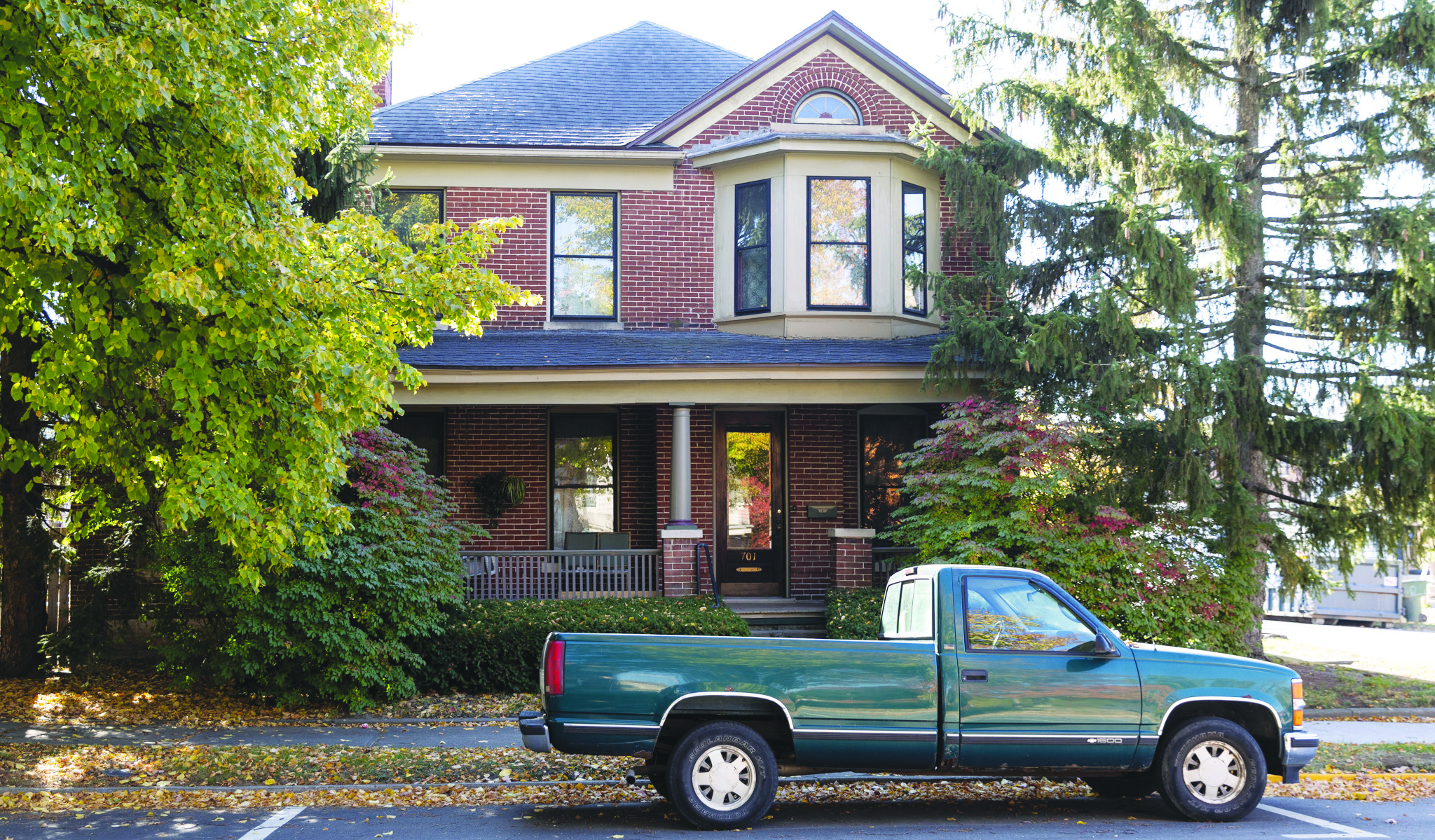
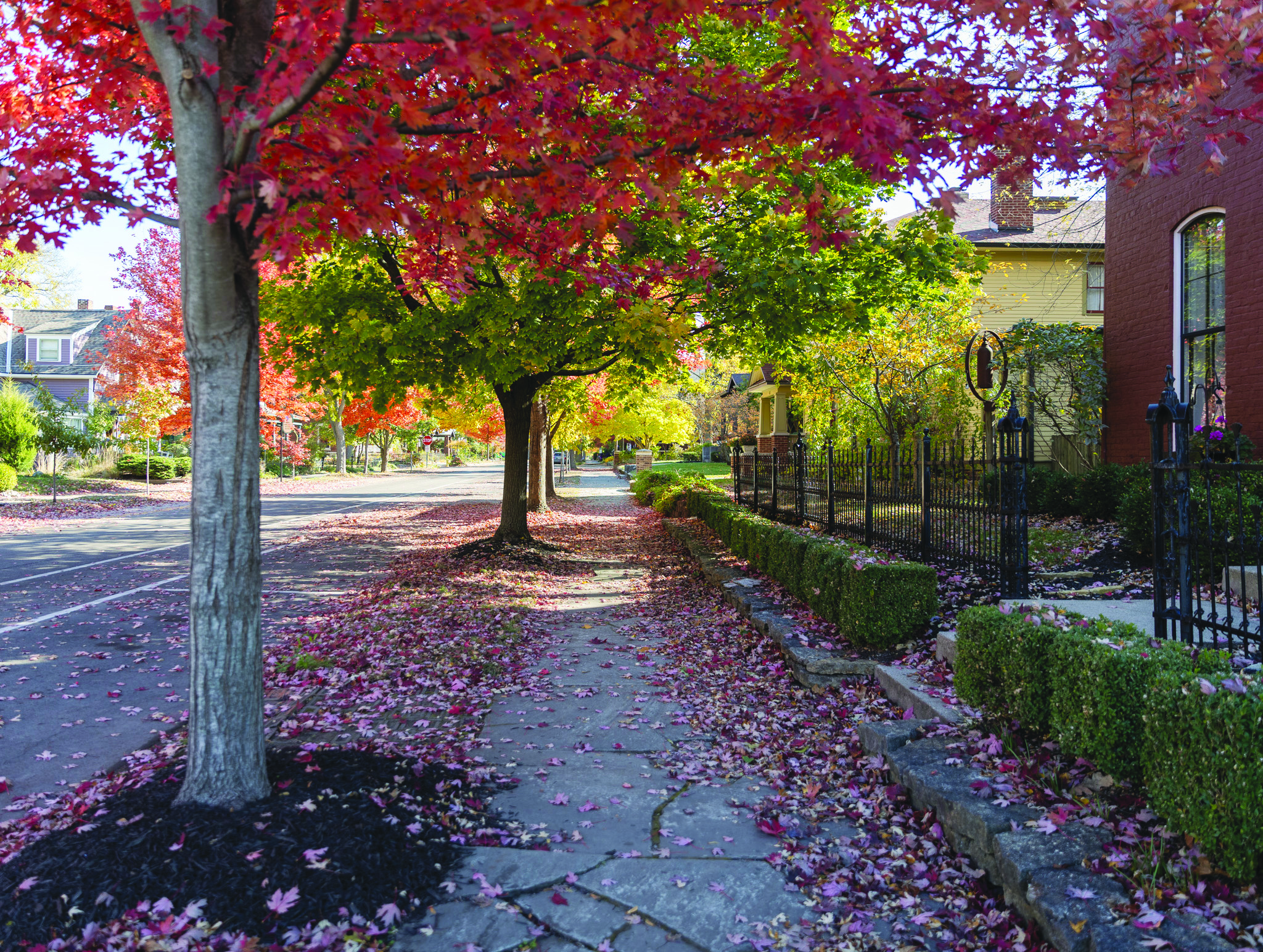
In the fall, when burning leaves scent the air along East Washington Street, it’s easy to imagine Emily Kimbrough as a girl, watching gas lamps flicker to life from the porch of her Victorian home.
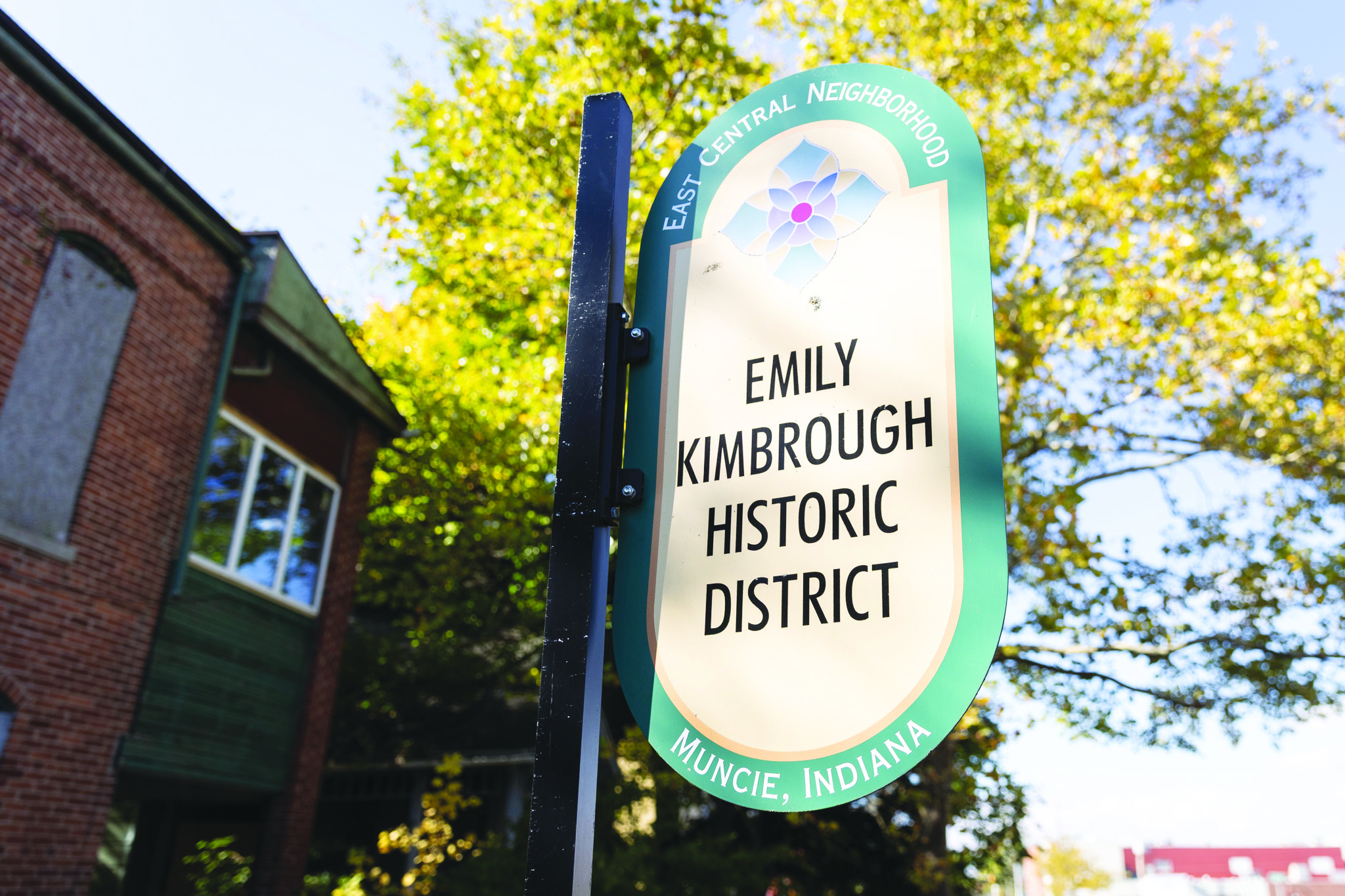
The author, born in Muncie in 1899, would grow up to write about her childhood in what locals called the “East End.” Today, the historic district that bears her name stands at a crossroads, caught between preserving architectural legacy and accommodating modern traffic demands.
The Indiana Department of Transportation (INDOT), along with the City of Muncie, has proposed four roundabouts along State Road 32 (SR 32), cutting through the heart of the Emily Kimbrough Historic District. The proposal has placed the neighborhood on Indiana Landmarks’ 2025 endangered list and revived long-standing tensions about a state highway that residents say should never have been routed through their community.
A neighborhood’s legacy
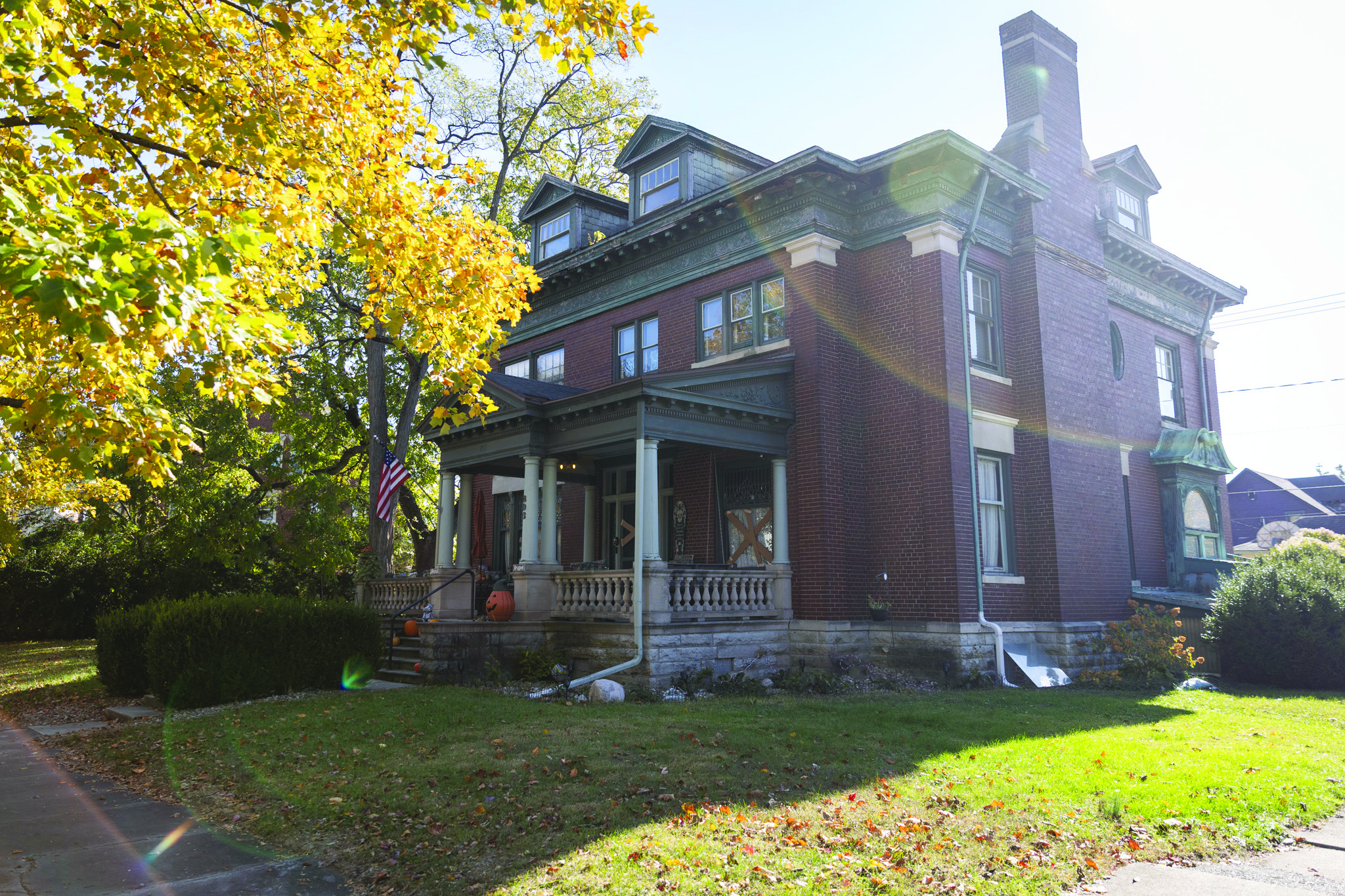
The Emily Kimbrough Historic District owes its existence to an accident of geology. When drillers struck natural gas in Delaware County in 1886, Muncie transformed almost overnight from a modest agricultural center into an industrial powerhouse.
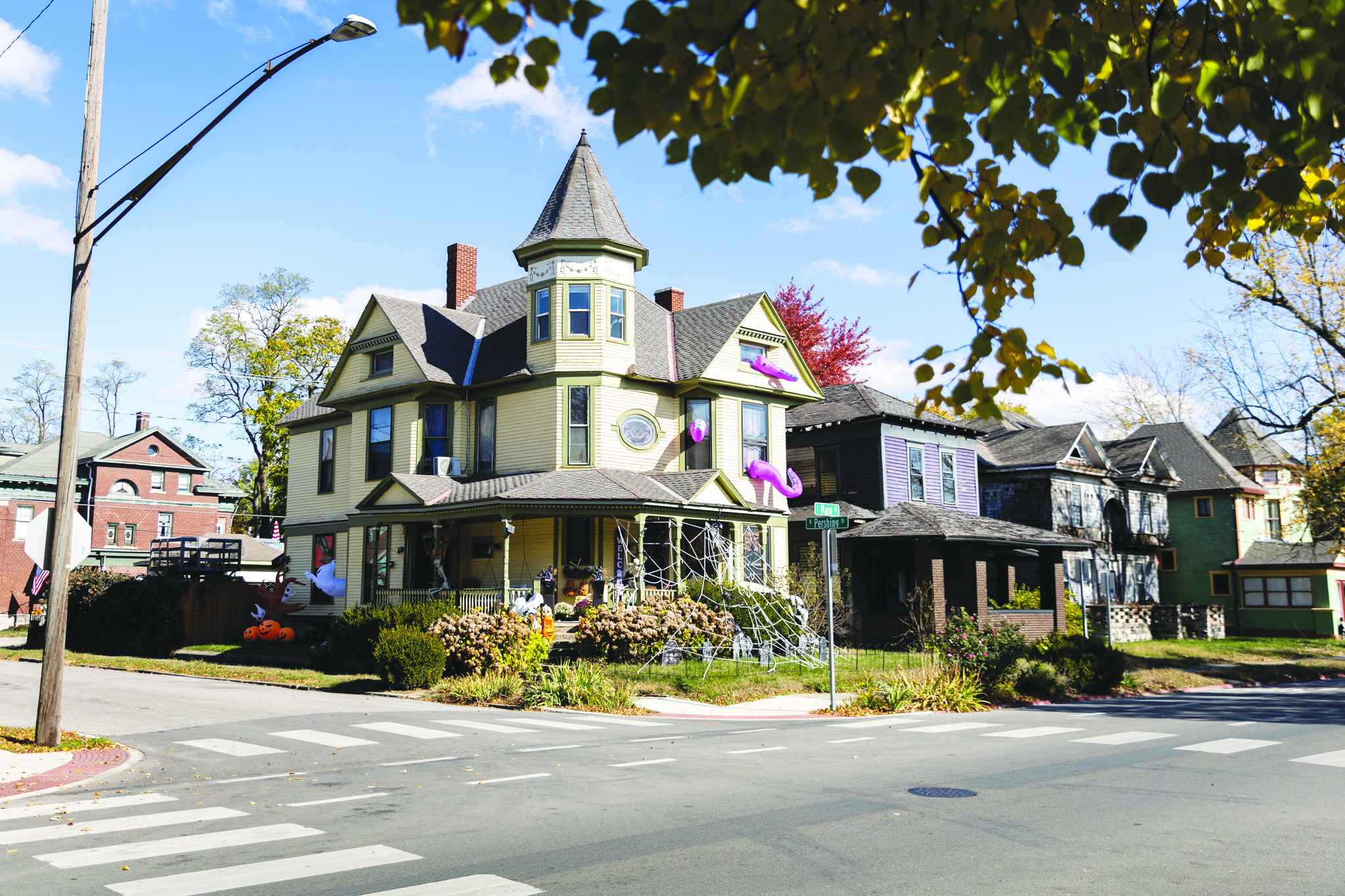
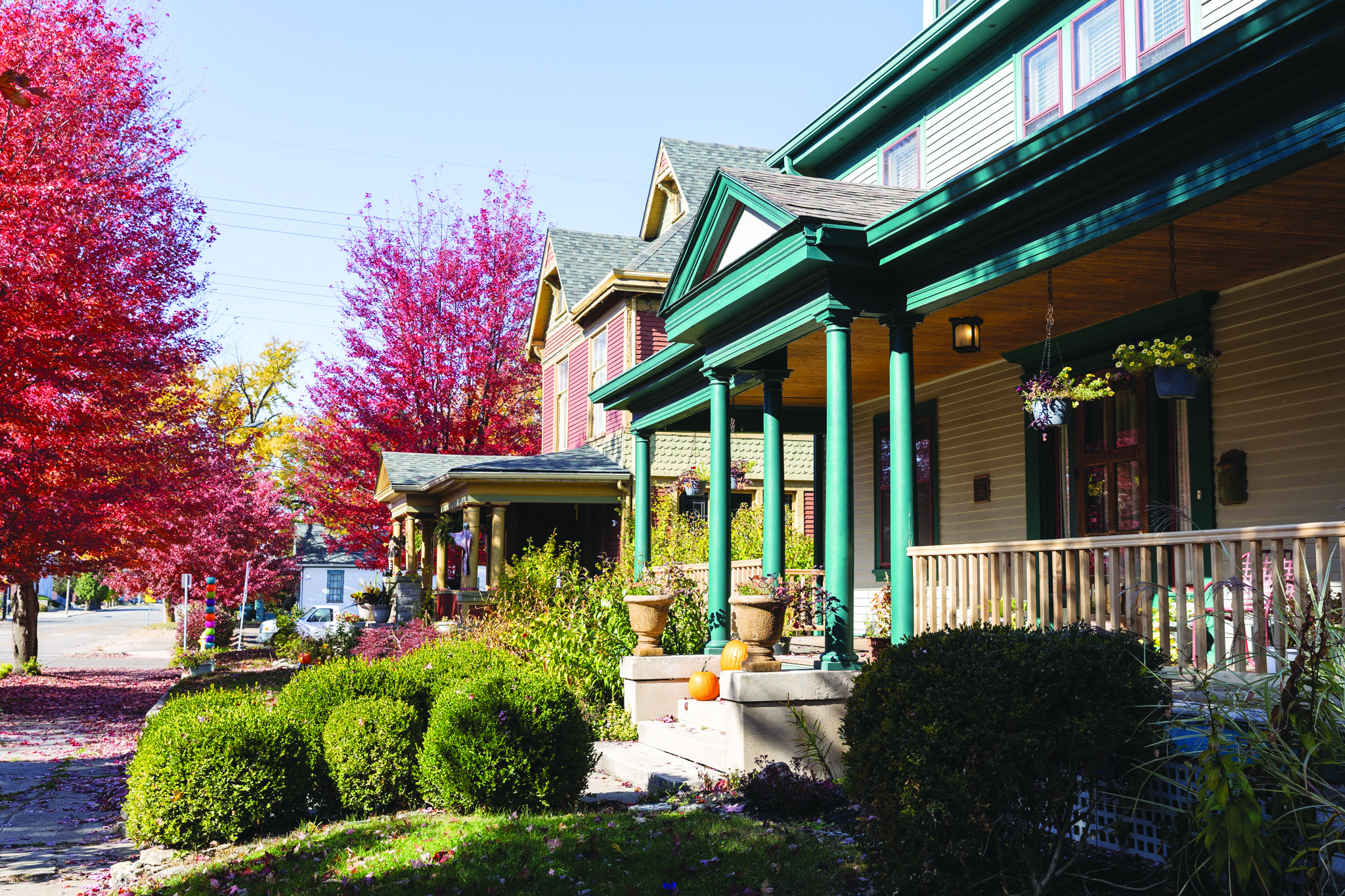
Those who profited from the gas boom built mansions in the “East End,” the preferred address of Muncie’s social elite. The architectural ambition of these industrialists still defines the neighborhood today.
When the neighborhood was designated as a local historic district in 1976 and listed on the National Register of Historic Places in 1978, residents chose to honor Emily Kimbrough’s connection to the area.
Kimbrough eventually left Muncie, leaving her house on East Washington Street. The house was then converted into the Emily Kimbrough Historic Museum, honoring her legacy and the neighborhood’s rich turn-of-the-century history.
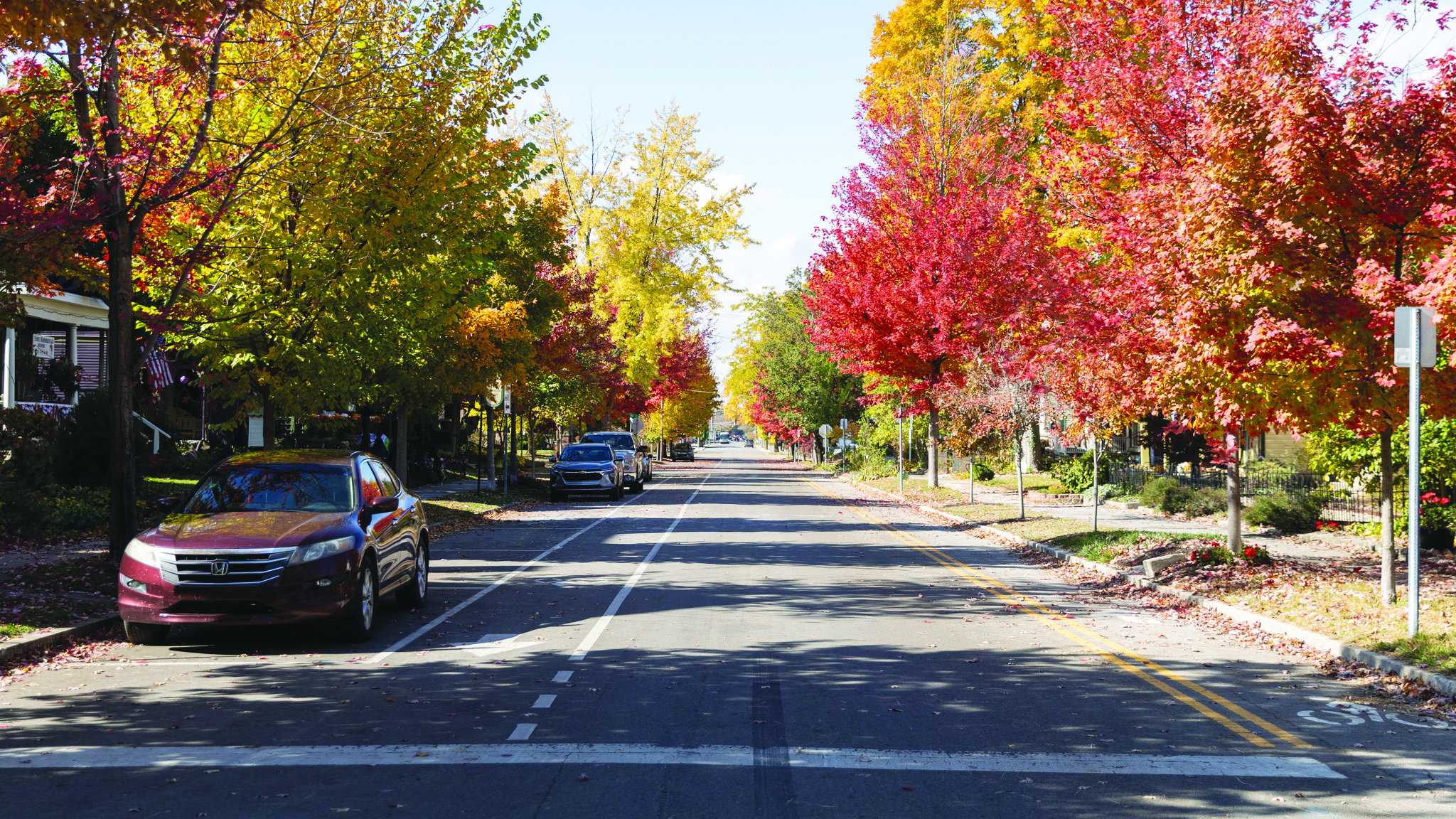
In 1958, SR 32 was routed through the neighborhood along Main and Jackson streets, converting what had been two-way streets into paired one-way highways. According to INDOT, the stated goal was to expedite traffic flow through the city.
J.P. Hall, an associate professor of historic preservation at Ball State University and a member of the Indiana Main Street Council, sees this decision as a critical inflection point.
“For decades, the neighborhood lived with the consequences, increased traffic speeds, pedestrian safety concerns and the general sense that a highway rather than a street ran through their community,” J.P. said.
In recent decades, renewed interest in historic architecture has brought new energy to the Emily Kimbrough District. This has resulted in groups like The East Central Neighborhood Association, which works to improve the area through maintaining traffic islands, organizing a community garden, coordinating neighborhood-wide alley cleanups and more.
Tom Collins, an associate professor of architecture at Ball State, is a resident of the historic neighborhood and a past president of the East Central Neighborhood Association board. Tom explained that over the years, residents and city officials recognized that traffic on SR 32 posed ongoing safety concerns.
To address this, the state completed a ‘road diet’ along SR 32 in 2024, a project designed to make the road safer by reducing lanes and adding pedestrian infrastructure. The reconfiguration reduced the two lanes of one-way traffic in each direction to a single lane per direction, added bike lanes separated by buffers, and improved handicap-accessible ramps at intersections.
“The traffic does move slower,” Tom said. “You do not see people driving down SR 32 going 60 miles an hour anymore, which they used to.”
For the first time in decades, the neighborhood appeared to be gaining ground in managing the traffic that had divided it.
The road relinquishment
A levee wall protecting the city from flooding, located near an INDOT bridge where SR 32 crosses the White River, was not in compliance with federal flood protection standards.
Rather than undertake the repairs themselves, INDOT offered an alternative: they would give the city the road. The agreement transferred roughly six miles of highway, the stretch of SR 32 running through Muncie from the bypass to Yorktown, to municipal control. INDOT also provided funding to support long-term maintenance and improvements.
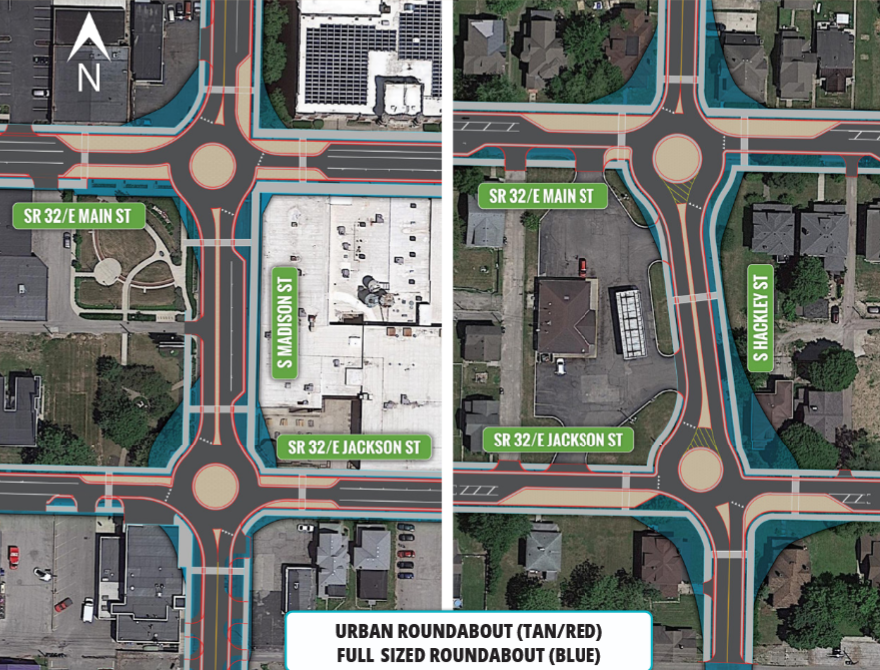
This included projects such as the road diet; however, embedded in the road relinquishment discussions was INDOT’s preferred alternative: four roundabouts. The roundabouts would be situated in the heart of the Emily Kimbrough Historic District, along Main and Jackson streets, where they intersect with Madison and Hackley.
Tom eventually discovered the proposal. INDOT and the city had identified roundabouts as their preferred alternative before any federal historic preservation review began — a sequence Tom argues conflicts with the intent of Section 106.
Section 106 is a federal process mandated by the National Historic Preservation Act of 1966. J.P. explained that it emerged as a response to decades of federal highway and urban renewal projects that demolished and divided city neighborhoods without community input. J.P. said that by the 1960s, public frustration with these destructive practices reached a breaking point.
“People were finally fed up and said, ‘This is enough,’” J.P. said. According to the Indiana Department of Natural Resources, Section 106 requires federal agencies to identify historic properties, assess the effects of their projects on those properties and work with stakeholders to mitigate the impact. However, the review does not mandate a specific outcome.
“What it does do is slow a project down and afford stakeholders an opportunity to voice their opinions,” J.P. said. “That, in many cases, can change a project.”
Mark Dollase, the preservation specialist for Indiana Landmarks’ central regional office, emphasized the State Historic Preservation Office’s (SHPO) role in this process. If consulting parties can demonstrate sufficient concern, the SHPO may refuse to sign off on the project agreement. Mark said that this can create leverage for communities. Yet in practice, the process can feel like a formality when things appear predetermined, as they do in Muncie.
According to INDOT material, the roundabouts are needed to address safety concerns. In the agency’s project documents, 157 accidents occurred at the four intersections between 2018 and 2020.
INDOT’s stated goal is to reduce overall crashes by at least 20 percent while maintaining stable traffic flow through 2047. At a May 2025 consulting party meeting, INDOT stated that the initial 2024 road diet did not accurately address these numbers.
But there is a critical issue: this data was collected before the 2024 road diet.
“So why did we do the road diet if it didn’t totally solve the problem?” Tom asked. “Did we know while we were doing the road diet that it actually wasn’t going to be 100 percent effective?”
During the consulting party meeting, INDOT officials acknowledged they are collecting new crash data but said only five months of post-diet data had been collected.
While INDOT and the City of Muncie believe that roundabouts are the best option to fix things, residents and outspoken voices, like Tom and J.P., argue otherwise.
“There’s a whole range of different things you could do,” Tom said, referencing raised traffic tables, extended curb cuts, stop signs and speed bumps as options.
Mark also advocates for alternatives. “Roundabouts only facilitate greater automobile and truck traffic; it does not make it more pedestrian-friendly,” Mark said.
The endangered list
Each year, Indiana Landmarks compiles a list of the state’s most endangered historic places. The designation is not a death knell, but a call to action. Properties usually stay on the list for two years as the organization works to find solutions.
Indiana Landmarks added the district to the list for two reasons: the first is disinvestment. Mark shared that two years ago, Landmarks staff walked the streets of the Emily Kimbrough District and said they saw both restored properties that had been maintained for decades and houses in distress.
“If we lose those properties, if they become vacant lots, they’re only going to diminish the overall character of the neighborhood that much more,” Mark said.
The second is the roundabout proposal. “When any project affecting a historic area, in this case, a transportation project, has such a major effect on that area, Indiana Landmarks is going to step up and voice our concerns about what those changes look like,” Mark said.
Mark worries the roundabouts would discourage people from choosing to live in the district. He believes that walkable neighborhoods are what people want when investing in urban areas.
“Doing what is being proposed by the city of Muncie and INDOT is sort of counterintuitive to what people would want to live in this neighborhood,” said Mark.
The local historic district designation is also more than symbolic. It is the law.
“In order for my neighborhood to become a locally designated historic district, 50 percent or more of the residents had to vote in favor of making it a local district,” Tom said.
He explained that this law mandates that any change to anything ranging from the streetscape or the homes — all must go through a federal review process.
Beyond the specific issue of roundabouts, residents and preservation professionals are frustrated by how the project unfolded.
“A lot of the discussions happened long before anybody in the neighborhood ever knew about it,” Tom said. “I’m not even sure anybody would have ever mentioned it until we got to the point where they have to do these public meetings.”
Tom believes this matters as much as the project itself.
“I don’t think neighborhoods like solutions to be imposed on them without any discussion,” Tom said. “They don’t like to find out after the fact the city’s been planning something with the state for years, and they’ve never been told.”
Mark shares this concern. “The people that are speaking out in Muncie are people who live there and have invested in this neighborhood for decades,” Mark said. “The fact that they’re being steamrolled right now and not being listened to is certainly concerning to us.”
According to INDOT materials, a public hearing has been scheduled for late 2025, with environmental document approval and right-of-way acquisition planned for early 2026. The consulting party meeting summary indicates construction has been delayed until early 2028.
For now, the Emily Kimbrough Historic District waits. The street pattern established before cars existed still connects neighbors to downtown. The historic homes still stand.
What the neighborhood will not see, its residents hope, is a solution imported wholesale from state highway engineering standards — a solution designed for cars, not for people. Whether Section 106 can protect that neighborhood’s future, nearly 60 years after a state highway first divided it, remains to be seen.
This article is a part of Ball Bearings Fall 2025 magazine: The Archival Edition. Read more stories online at ballbearingsmag.com and pick up the print edition of the magazine across Ball State’s campus now.