Maria VanVreede, registrar and collection manager at the David Owsley Museum of Art (DOMA), said that each of the thirteen thousand objects in its collection represents a story, a process and a responsibility.
Behind each piece displayed in the museum’s galleries lies a trail of paperwork, condition reports, and systems that ensure the object can be traced; tomorrow, next year, or fifty years from now.
That trail is Maria’s world. Her work transforms each donation or acquisition from a personal gesture to a part of art history.
The art of the offer
Every potential acquisition begins the same way, with a conversation.
“Most of the time, they talk to Bob,” Maria said, referring to Museum Director Robert La France. “Very occasionally, somebody talks to me.”
Maria and other members of DOMA’s team take time to discuss what is being offered, whether or not it fits the museum’s mission and what’s actually possible to accept. Some items are an easy yes, while others require weeks of research before the museum can commit.
The curatorial team begins investigating the piece’s origin and Robert does the necessary research. If there are questions or gaps, items can be placed on loan first, allowing DOMA to safely study them before making anything official.
Then comes the Accessions Committee, which reviews all pending donations and decides which will join the permanent collection.
The arrival
Once accepted, the piece needs to physically arrive at the museum, a step Maria said can be surprisingly complicated. This means coordinating shipping, handling, insurance and working with fine art handlers for packing.
Not every piece is donated and occasionally, DOMA purchases work using designated funds. However, whether it’s gifted or bought, every item receives the same amount of meticulous treatment upon its arrival at the museum.
“Accessioning is the legal process that turns a donation into a museum piece,” Maria said.
It’s also one of the most important steps of this process, defining the registrar’s work.
Each piece receives an accession number, a unique code based on the year, donation lot and sequence. The most important thing is that the number is unique.
Next comes a condition check. If an item needs attention, DOMA has a contracted conservator who will step in.
“He can do a lot on site,” Maria said. “Things that need a lot of work will get triaged.”
Even minor notes, like flaking paint, a tear in paper, etc., are logged in the pieces file.
Order in archive
Then begins what Maria calls “the standardizing work.” Every detail of the work, ranging from artist, date, materials, dimensions, and acquisition source, goes into DOMA’s digital database, linked to its accession number.
“If you’re not doing it the same [way for each acquisition], you’re not going to be able to find anything,” she said.
The data entry is paired with a physical file, reinforcing the record on paper and on screen. Once cataloged, the piece is ready for curatorial decisions, led by Robert.
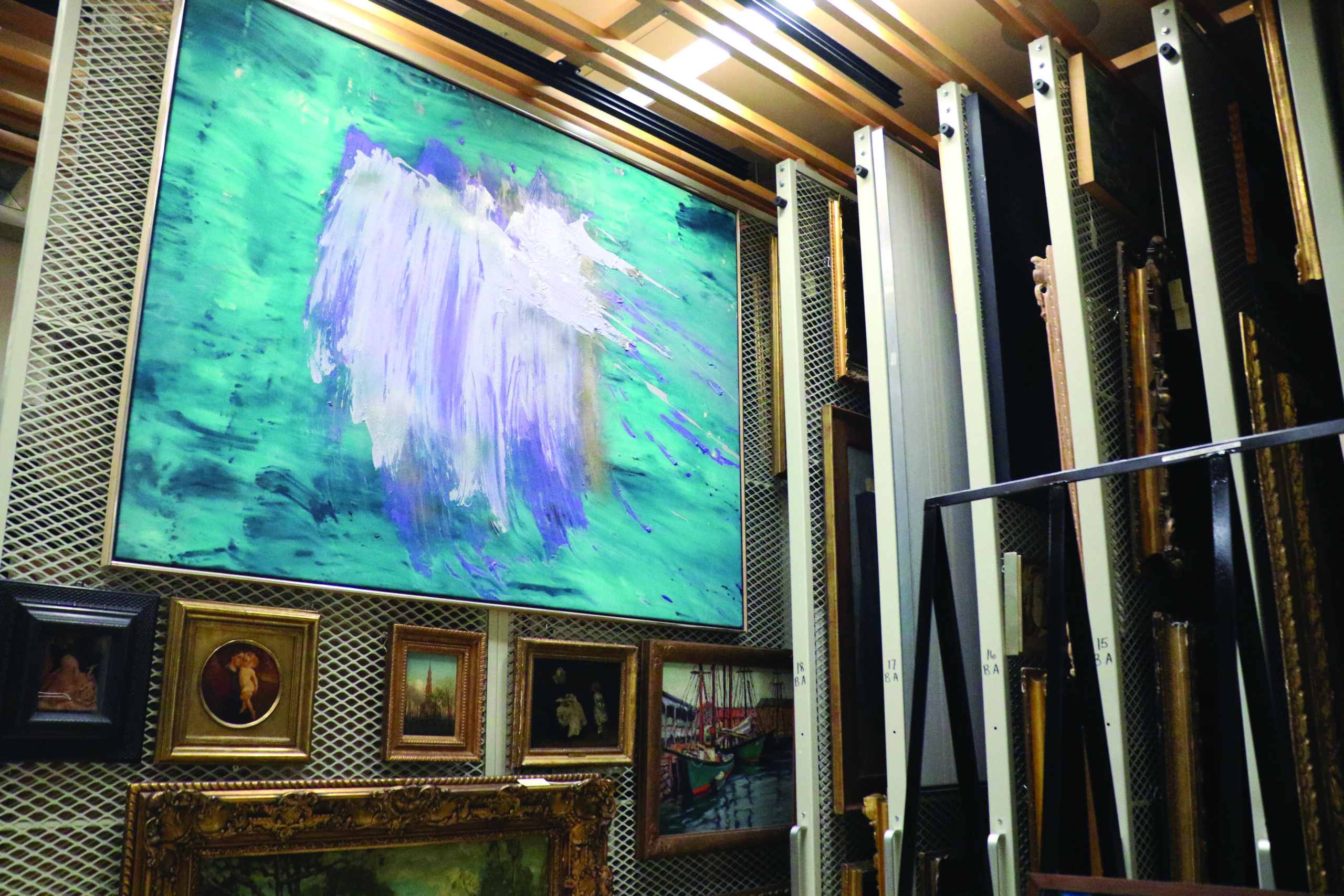
Pieces not chosen for display are stored carefully, sometimes for years, in DOMA’s storage rooms. The climate-controlled areas are monitored for pests, temperature and humidity.
“What we do in storage, caring for all of that, [is] to make sure things are going to last and be accessible,” Maria said.
A living collection
Maria’s role doesn’t end once a piece is tucked on a shelf. The museum lends items to other institutions, hosts exhibitions and supports researchers who contact DOMA to study its holdings.
DOMA’s annual report reflects the scale of this work. In the 2024-2025 fiscal year, the museum accessioned 81 works, five of which were portfolios containing hundreds of individual prints.
For Maria, being a registrar means working constantly at the intersection of art and order, reconciling history. She said she loves organizing and standardizing data, work that helps keep the museum’s past legible now and for its future.
From a donor’s personal collection to DOMA’s digital database, each object passes through Maria’s care, labeled, logged and preserved. The work isn’t flashy, but it’s the reason the museum can tell stories for generations to come.
“The museum exists for the community and we take great pride in that,” she said.
This article is a part of Ball Bearings Fall 2025 magazine: The Archival Edition. Read more stories online at ballbearingsmag.com and pick up the print edition of the magazine across Ball State’s campus now.